If you’ve been thinking about wrapping a work vehicle, you’ve probably already searched for pricing and come away more confused than when you started. The range is wide, the variables are many, and most sources are either too vague or too specific to be useful.
This article breaks down what actually drives vehicle wrap costs, what a realistic budget looks like for different vehicle types, and, more importantly, how to think about the return on that investment over time.
What Determines the Cost of a Vehicle Wrap?
Vehicle wrap pricing is not one-size-fits-all. Four factors account for most of the variation you’ll see between quotes.
01. Vehicle Size and Complexity
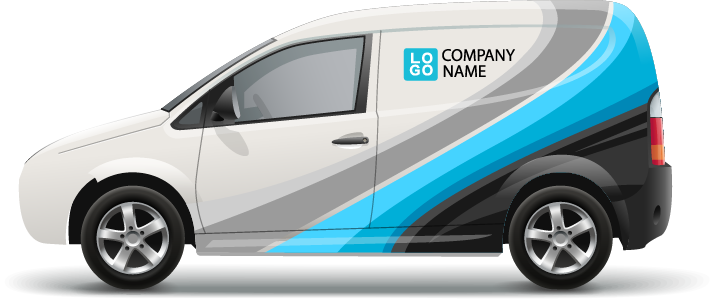
This is the biggest cost driver. A compact car has far less surface area than a full-size cargo van or a box truck, and that difference shows up directly in material cost and installation time. Vehicles with lots of curves, recesses, door handles, and compound surfaces also take longer to wrap correctly; flat-sided vehicles are faster and less material-intensive.
As a general reference point for full wraps:
- Compact car or small sedan: lower end of the range
- Full-size pickup truck or SUV: mid-range
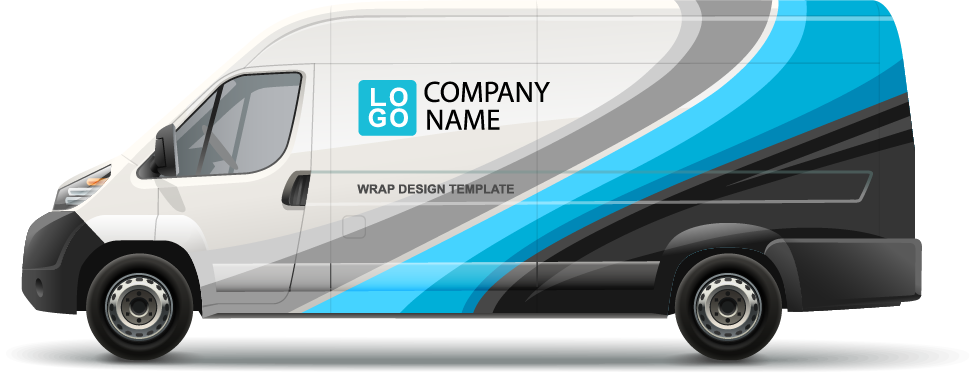
- Full-size cargo van: mid-to-upper range
- Box truck or large commercial vehicle: upper end, often significantly higher
A Note on Pricing
02. Wrap Type: Full, Partial, or Spot Graphics
Not every vehicle wrap needs to cover every inch of the vehicle. The three main options are:
Full wrap: Covers the entire vehicle exterior. Maximum visual impact, maximum brand consistency across a fleet. Highest cost, longest installation time.
Partial wrap: Covers a defined section of the vehicle — typically the sides and rear, leaving the hood and roof in the vehicle’s factory color. Significantly less material, shorter install, lower cost. Works well when the vehicle color complements the design.
Spot graphics or decals: Individual cut graphics applied to specific areas — door logos, phone numbers, taglines. Lowest cost. Best for simple, recurring applications like fleet numbering or basic contact information.

03. Vinyl Material Grade
Not all vinyl is the same. The industry standard for vehicle wraps is cast vinyl — a premium material that conforms to curves and complex surfaces, resists shrinking over time, and holds color well under extended UV exposure. It’s the right choice for full vehicle wraps and anything expected to last five or more years.
Calendered vinyl is a less expensive option that works for flat or near-flat surfaces. It’s appropriate for some partial wraps and spot graphics, but it does not conform as well to compound curves and has a shorter expected lifespan. A shop offering unusually low pricing is often quoting with calendered vinyl — worth asking about if price varies significantly between bids.
04. Design Complexity
A full-coverage photorealistic design with gradients, fine typography, and multiple image elements takes longer to produce and requires more precision during installation than a simple two-color design with a logo and phone number. If your wrap design is being created from scratch, design fees are typically a separate line item from the print and installation cost.
If you have existing brand files — vector logos, established color codes, brand standards — the design process is significantly faster and less expensive than starting without them.
How Long Does a Vehicle Wrap Last?
A properly installed cast vinyl wrap on a vehicle that is garaged or covered when not in use can last five to seven years. Vehicles that live outdoors in direct sun year-round will see the lower end of that range; vehicles that are garaged regularly can exceed it.
The factors that shorten wrap life most reliably are:
- Extended outdoor storage without cover, particularly in direct sun
- Automatic car washes with abrasive brushes — hand washing or touchless washing is strongly preferred
- High-pressure washing directed at wrap edges, which can cause lifting
- Improper installation, particularly on high-stress areas like hood edges and door handles
When to Use It
The ROI Question: Is a Vehicle Wrap Worth It?

This is where the math gets interesting. A vehicle wrap is not an expense that disappears when it’s paid for — it’s a one-time investment that generates impressions continuously for the life of the wrap, whether or not you’re actively working that day.
Cost per impression over time
Industry research consistently shows that vehicle wraps generate between 30,000 and 70,000 impressions per day in markets where the vehicle is being driven. That number varies significantly by geography and driving patterns — a vehicle doing local delivery routes in a medium-density market like the Mid-Ohio Valley will generate fewer impressions than one navigating urban Interstate traffic, but the comparison to other media still holds.
Over a five-year lifespan, the math looks like this: a single wrapped vehicle at a conservative 20,000 impressions per day generates approximately 36.5 million impressions over five years. Divided by the wrap investment, the cost per thousand impressions comes out well below what most businesses pay for local radio, print, or digital advertising.
The more relevant comparison for a local service business is not cost-per-impression but cost-per-recall. A vehicle driving the same geographic territory repeatedly builds cumulative brand recognition in a way that a single ad placement cannot. The tenth time a homeowner or facility manager sees the same truck in their neighborhood is worth considerably more than the first.
Fleet considerations
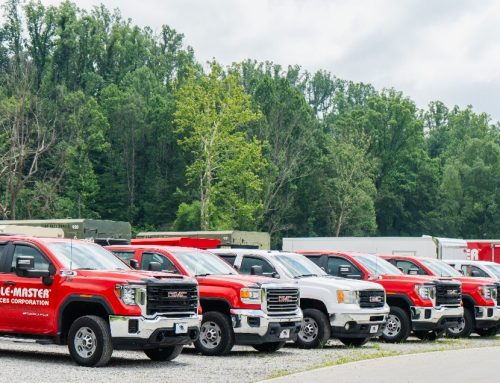
For businesses that want a professional appearance and the ability to update or remove the branding later, a wrap is almost always the better investment than a custom paint job. The ROI argument is even stronger when applied to a fleet. A fleet of five matching wrapped vehicles creates a sense of scale and operational credibility that individual decals or mismatched vehicles cannot. It signals that the business is established, organized, and serious about its brand — all things that matter when a potential customer is choosing between a company they recognize and one they don’t.
Fleet wraps also benefit from economies of scale. Consistent design across multiple vehicles reduces per-vehicle design time, and shops that specialize in fleet work can often schedule installation more efficiently when multiple vehicles are wrapped at once.
What to Ask Before You Get a Quote
Not all vehicle wrap shops operate the same way. Before committing to a vendor, these questions will help you evaluate what you’re actually getting:
- Is the print and installation done in-house, or is any part of it outsourced? In-house production means one point of accountability and faster turnaround.
- What vinyl brand and grade is being used? Ask specifically about cast vs. calendered vinyl and laminate.
- Does the quote include design, or is that a separate fee? If your files need to be adapted to the vehicle template, who handles that?
- Can you see examples of completed work, ideally on similar vehicle types?
At Signality Graphics in Marietta, Ohio
We design, print, and install entirely in-house. Every wrap is produced on our large or Grand Format equipment with cast vinyl and UV-protective laminate as standard. If you’re in the Mid-Ohio Valley and want to talk through a vehicle wrap or fleet project, we’d welcome the conversation.
Call 740.371.5100 or visit signalitygraphics.com
The Short Version
Vehicle wrap cost is real, but so is the return. A quality wrap on a single work vehicle, installed professionally and maintained properly, will likely pay for itself many times over in brand impressions before it needs to be replaced. For a fleet, the case is even stronger.
If you’re pricing vehicle wraps, compare quotes carefully — make sure you’re comparing the same material grade, the same scope, and the same level of included service. The lowest quote is rarely the best value.