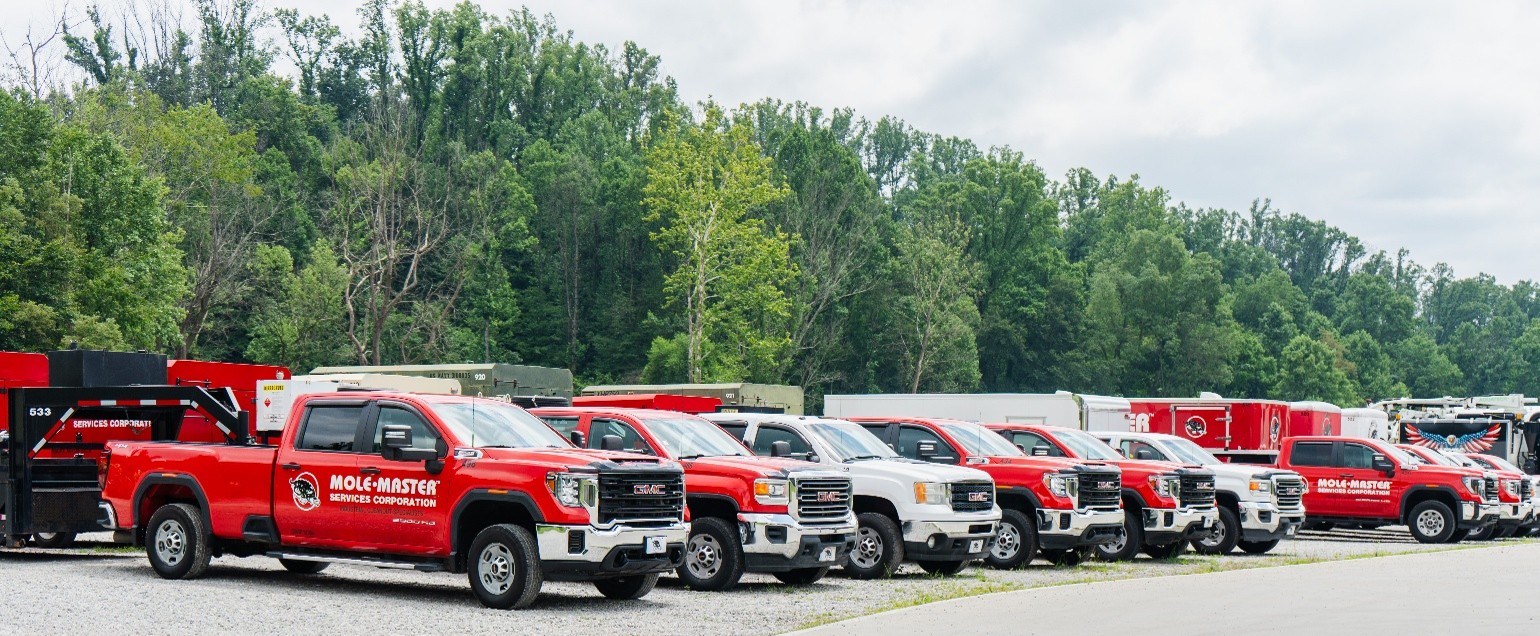
Every vehicle in your fleet is already doing one job: getting your people and equipment where they need to go. Fleet graphics give it a second job — building brand recognition in every neighborhood, job site, parking lot, and highway your drivers pass through.
Done well, a branded fleet communicates that your business is established, professional, and active in the community. Done poorly — inconsistent graphics, low-quality materials, design that doesn’t read at speed — it communicates the opposite.
This guide covers how to plan a fleet graphics program, what decisions matter most, and how to avoid the mistakes that end up costing more time and money than doing it right the first time.
Why Fleet Graphics Work Differently Than Other Advertising
Most advertising asks a potential customer to stop what they’re doing and pay attention. Fleet graphics don’t ask for anything — they simply exist in the physical environment where your customers already are.
A wrapped service van parked in a neighborhood while your technician is on a job is visible to every person who walks or drives past. That same van driving the same routes week after week builds cumulative recognition in a way that a single ad placement cannot replicate. By the time a homeowner or facility manager actually needs your service, they’ve already seen your vehicle multiple times. The call that starts with “I’ve seen your trucks around” is a direct product of fleet graphics doing their job.
This is why fleet graphics tend to perform especially well for local service businesses: HVAC, plumbing, electrical, landscaping, pest control, construction, facility maintenance. The more your vehicles are present in your service territory, the more impressions your fleet generates — and unlike digital advertising, those impressions don’t stop when the budget runs out.
Planning Your Fleet Graphics Program
Before anyone designs anything, several decisions need to be made. Skipping this step is where most fleet programs run into problems.
Decide on your coverage level
Fleet graphics range from minimal — a door logo and phone number — to full-coverage wraps that transform the vehicle into a rolling billboard. The right level depends on your brand goals, your budget, and how the vehicles are used.
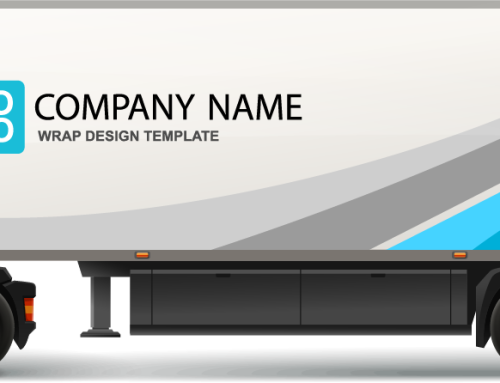
Full wrap: Maximum visual impact. Covers all or most of the vehicle exterior including hood, roof (for vehicles that park in view), sides, and rear. Best for vehicles with high daily impressions — delivery routes, service calls in dense areas, highway driving.
Partial wrap: Covers the most-visible surfaces — typically the sides and rear — leaving the hood and roof in the factory color. Effective and more cost-efficient than a full wrap, particularly when the vehicle’s factory color works with the brand palette.
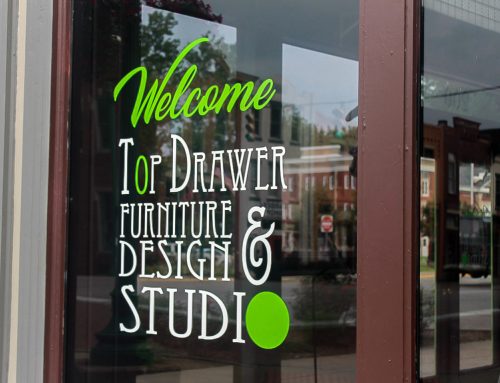
Spot graphics: Individual cut vinyl elements applied to specific areas. Door logos, contact information, unit numbers. Good for fleets that need basic identification rather than full brand coverage, or for adding markings to vehicles that already have partial wraps.
Establish your brand standards first
The most common fleet graphics mistake is moving to design before the brand is settled. If your logo exists in multiple versions, your brand colors aren’t documented in Pantone or CMYK values, or different people on your team have different ideas about what the company “looks like,” those issues will surface during the design process and slow everything down.
Before briefing a designer or a print shop, you should be able to answer these questions:
- What is the primary logo (vector file, not a screenshot or a JPG)?
- What are the exact brand colors in both Pantone and CMYK/RGB?
- Is there a secondary color palette, or is the design anchored to one or two colors?
- Are there any font restrictions, or is typography left to the designer?
- Are there any existing brand guidelines, even informal ones, that should be followed?
If the answer to most of those questions is “we’re not sure,” a brand standards conversation before the fleet design process will save significant time and revision cycles later.
Think about legibility, not just aesthetics
Vehicle graphics are viewed in motion, at distance, and in varying light conditions. Design decisions that look great on a computer screen don’t always translate to a vehicle at 40 miles per hour.
The most important legibility principles for fleet graphics:
- Phone numbers and website addresses need to be large. The instinct to keep contact information small and tasteful works against you. If a driver can’t read your phone number from a car length away, it’s not doing its job.
- High contrast between the background and typography is non-negotiable. Light text on a light background, or dark on dark, fails in low light and at distance.
- Limit the number of messages on the vehicle. One primary service description, a tagline if you have one, a phone number, a website, and a logo. Adding more makes everything less readable.
- Simple shapes and bold color blocks read better at speed than complex illustrations or photographic backgrounds with busy detail.
Plan for the full fleet, not just one vehicle
If you have three vehicles today but expect to add two more in the next year, design with that growth in mind. A template-based design system — where the core layout and elements are fixed but can be adapted to different vehicle models — is significantly more cost-effective than redesigning from scratch each time a vehicle is added.
It also means that when vehicle 4 and 5 join the fleet, they look like they belong to the same family as vehicles 1, 2, and 3. Consistency across the fleet is what creates the impression of scale and professionalism.
Material Selection for Fleet Applications
Fleet vehicles live hard lives. They’re driven daily, washed regularly, parked outdoors in all weather, and expected to look professional for years. Material selection matters more for fleet applications than for one-time or short-term graphics.
Cast vinyl for full and partial wraps
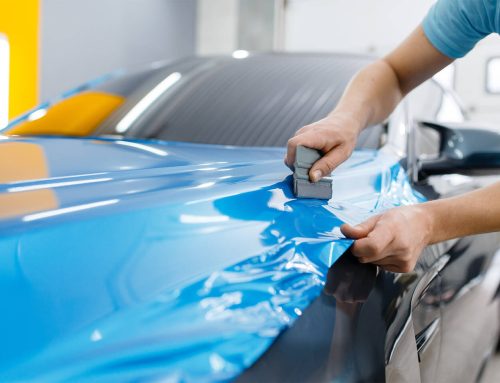
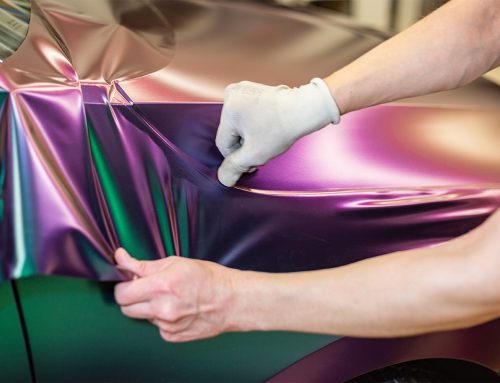
Cast vinyl is the industry standard for vehicle wraps and the right choice for any fleet application where the graphics will be on the vehicle for more than a year. It conforms to compound curves and recessed areas without stretching or wrinkling, holds color well under UV exposure, and can be cleanly removed without damaging the factory finish when the time comes.
A cast vinyl wrap with UV-protective laminate applied over the print is the specification to ask for. The laminate protects the print from fuel splash, cleaning chemicals, UV fading, and minor abrasion — all things a working fleet vehicle encounters regularly.
Calendered vinyl for flat surfaces and spot graphics
Calendered vinyl is a less expensive alternative that performs well on flat or near-flat surfaces. It’s appropriate for door panels on boxy vehicles, flat cargo area doors, and spot graphic applications. It is not the right choice for full wraps on vehicles with significant curves — it will not conform correctly and is more likely to lift at edges over time.
Reflective vinyl for high-visibility applications
For fleets operating in conditions where visibility matters — utility vehicles, roadside service, construction — reflective vinyl on specific elements (chevron patterns, striping, emergency identifiers) increases visibility in low-light conditions significantly. This is a specialized material that requires specific design accommodation and installation experience.
The Installation Process: What to Expect
Understanding how a professional vehicle wrap is installed helps set realistic expectations for timing, vehicle availability, and what the finished product should look like.
Vehicle preparation
A vehicle should be delivered to the installer clean. Any existing decals, adhesive residue, or surface contamination needs to be removed before new graphics are applied. Most professional installers include surface preparation as part of the installation process, but a vehicle that arrives in poor condition will require more prep time and may affect the installation timeline.
New vehicles should ideally not be wrapped immediately after purchase. Factory paint needs time to fully cure — most manufacturers recommend 30 days minimum before applying vinyl graphics.
Template and design fitting
Before printing, the design is fitted to a template specific to the vehicle’s make, model, and year. This template accounts for door handles, mirrors, fuel doors, and other surface variations that affect how the design will look when installed. An in-house design and print operation can catch and correct fitting issues before anything goes to the printer — an outsourced shop may not have the same feedback loop.
Installation time
A full wrap on a standard cargo van typically takes one to two days for an experienced installer, depending on design complexity. Partial wraps and spot graphic installations are faster. For a fleet of multiple vehicles, sequencing the installation so that vehicles are out of service one at a time minimizes operational disruption.
What In-house Production Means for Your Fleet
At Signality Graphics, design, printing, and installation all happen under one roof. That means faster turnaround, a single point of contact from brief to installed product, and the ability to catch and correct design fitting issues before anything is printed.
For fleet programs in particular, in-house production means we can standardize your template once and apply it consistently across every vehicle in the fleet — now and as your fleet grows.
Maintaining Fleet Graphics
A properly maintained vehicle wrap will last five to seven years on a working fleet vehicle. The maintenance requirements are straightforward.
- Hand wash or touchless wash only. Automated car washes with rotating brushes will damage wrap edges over time.
- Avoid high-pressure washing directed at wrap edges, corners, or any area where the vinyl terminates. Sustained high pressure can force water under the edge and cause lifting.
- Address edge lifting promptly. Small lifted areas can usually be re-adhered cleanly; left unaddressed, they grow and eventually require section replacement.
- Keep the vehicle garaged or covered when not in use if possible. UV exposure is the primary driver of color fade and material degradation.
- Fuel splash on the lower portions of the vehicle is normal. Wipe down promptly — prolonged fuel contact can affect the adhesive at the vinyl edge.
Fleet Graphics and Your Brand: The Long Game
The businesses with the strongest local brand recognition are almost always the ones that have been consistent over time. The same logo, the same colors, the same look across every vehicle, every job site sign, every uniform — it compounds. Each time a potential customer sees a recognizable vehicle in their neighborhood, the brand gets a little stronger.
Fleet graphics are one of the most durable and cost-efficient investments a local service business can make in its brand. The work is done once. The vehicle keeps running. The impressions keep accumulating.
If you’re in the Mid-Ohio Valley and thinking about wrapping one vehicle or standardizing an entire fleet, we’d welcome the conversation. Call 740.371.5100 or visit signalitygraphics.com to get started.