A construction site is one of the most visible marketing opportunities a contractor will ever have — and most contractors treat it like a regulatory obligation rather than a business asset.
Every person who drives past a job site reads the signs. They see who’s doing the work. They form an impression of the company based on whether the site looks organized and professional or haphazard and makeshift. For a GC or specialty trade operating in a regional market like the Mid-Ohio Valley, that impression accumulates over time. Dozens of job sites. Hundreds of drive-bys. Either it builds a brand or it doesn’t.
This guide covers what construction site signs a contractor actually needs, what the compliance requirements are, how to get them produced quickly, and how to make the job site itself work harder for the business.
The Required Signage: Compliance First
Before getting to branding, there’s a baseline of signage that’s either legally required or effectively mandatory on any active construction site. Skipping these isn’t a marketing decision — it’s a liability.
Site identification signs
Project identification signs — showing the project name, owner, general contractor, and often the architect and key subcontractors — are standard on virtually every permitted commercial construction project. Many municipalities and project owners require them. Even where not strictly required, they’re a baseline expectation on any professional job site.
The standard format is a rigid panel, typically aluminum composite material (ACM) or exterior-grade substrate, with the project information printed in a format that reads clearly from the street. Sizes vary by project scale — a small commercial renovation might use a 4×4 panel, while a major development project might warrant an 8×10 or larger format that’s visible from a significant distance.
Safety signage
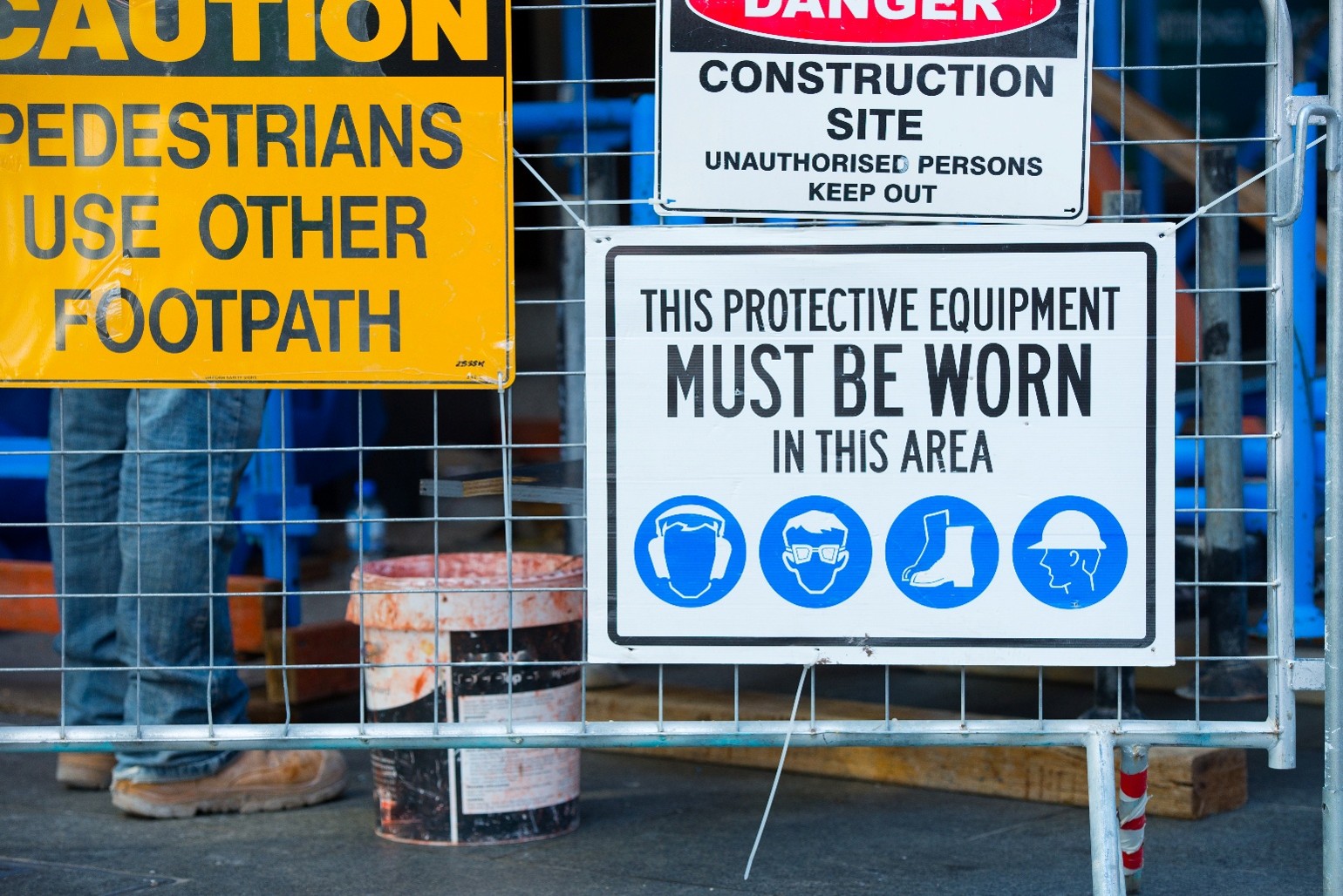
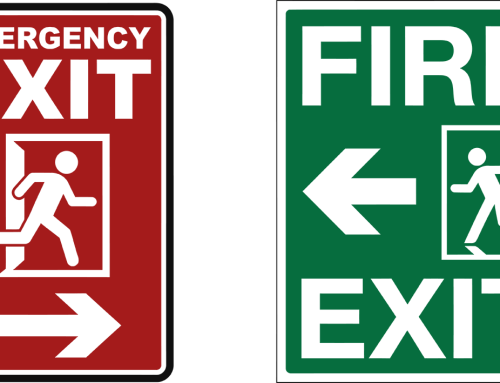
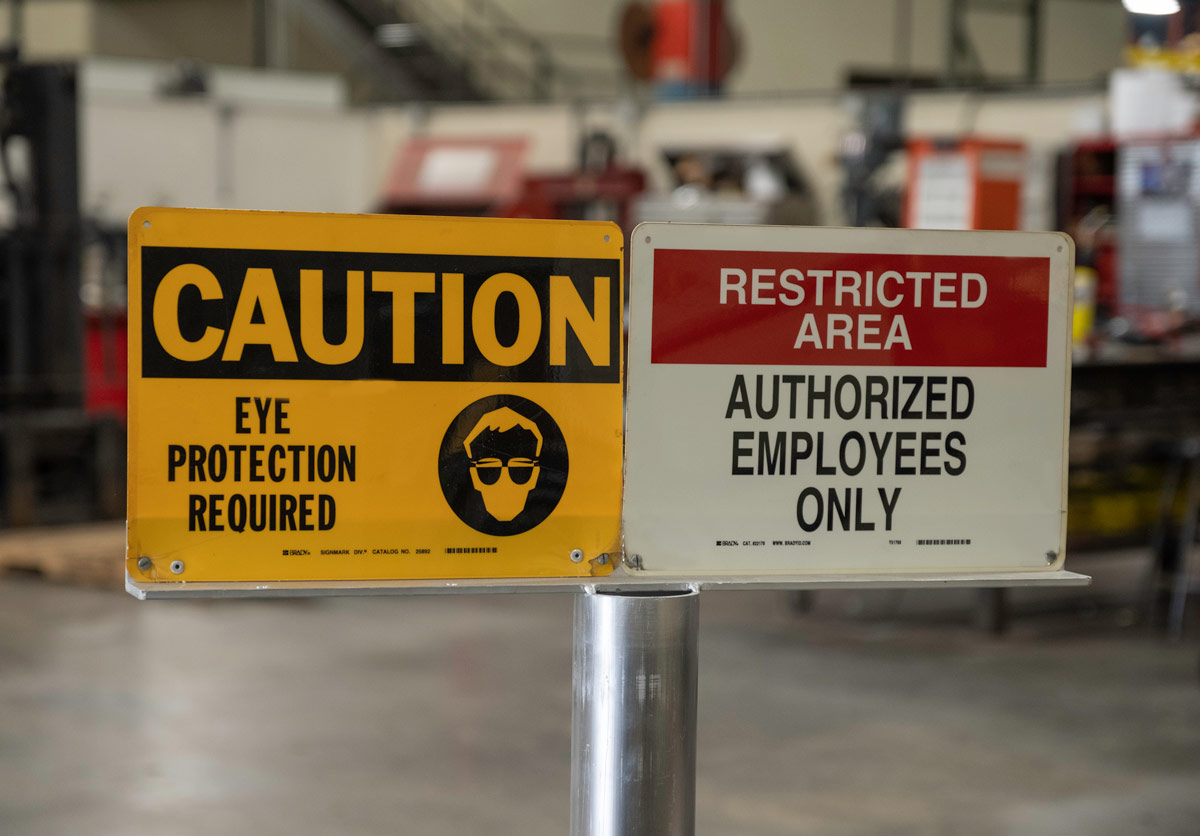
OSHA requirements for construction site safety signage are specific and non-negotiable. Hard hat zones, restricted access areas, electrical hazard warnings, fall hazard notifications, and emergency contact information all require signage that meets ANSI Z535 color and format standards.
The ANSI Z535 standard specifies:
- Danger signs: red header, white lettering, black body — for immediate hazards that will cause death or serious injury
- Warning signs: orange header, black lettering — for hazards that could cause death or serious injury
- Caution signs: yellow header, black lettering — for hazards that could cause minor or moderate injury
- Notice signs: blue header, white lettering — for informational content without a direct safety implication
Using the wrong color for the wrong severity level isn’t just aesthetically incorrect — it creates confusion and can constitute a compliance violation during an OSHA inspection. Signs produced by a shop that understands compliance requirements come with the correct color coding, header formatting, and signal word usage built in.
Traffic control and pedestrian safety signage
For sites adjacent to public roads or pedestrian areas, traffic control signage is required under MUTCD (Manual on Uniform Traffic Control Devices) standards. These include construction zone warning signs, pedestrian detour signage, flagging zone markers, and any temporary road closure notifications.
For sites in downtown or mixed-use areas — particularly relevant in Marietta’s downtown corridor and Parkersburg’s commercial districts — pedestrian protection hoarding and perimeter fencing with clear signage directing foot traffic around the site is both a safety requirement and a public relations consideration. A site that disrupts pedestrian flow without clearly communicating the path of travel creates friction with the surrounding businesses and community.
The Marketing Opportunity: Job Site as Billboard
Beyond compliance, a well-signed job site is one of the most cost-effective local marketing tools available to a contractor. Here’s how the most visible contractors in any regional market approach it.
The project sign as a calling card
The project identification sign is the most viewed piece of marketing material most contractors produce for any given job. Everyone who drives past the site sees it. The project owner, their neighbors, the surrounding businesses, the workers from other trades on the same site — all of them read it.
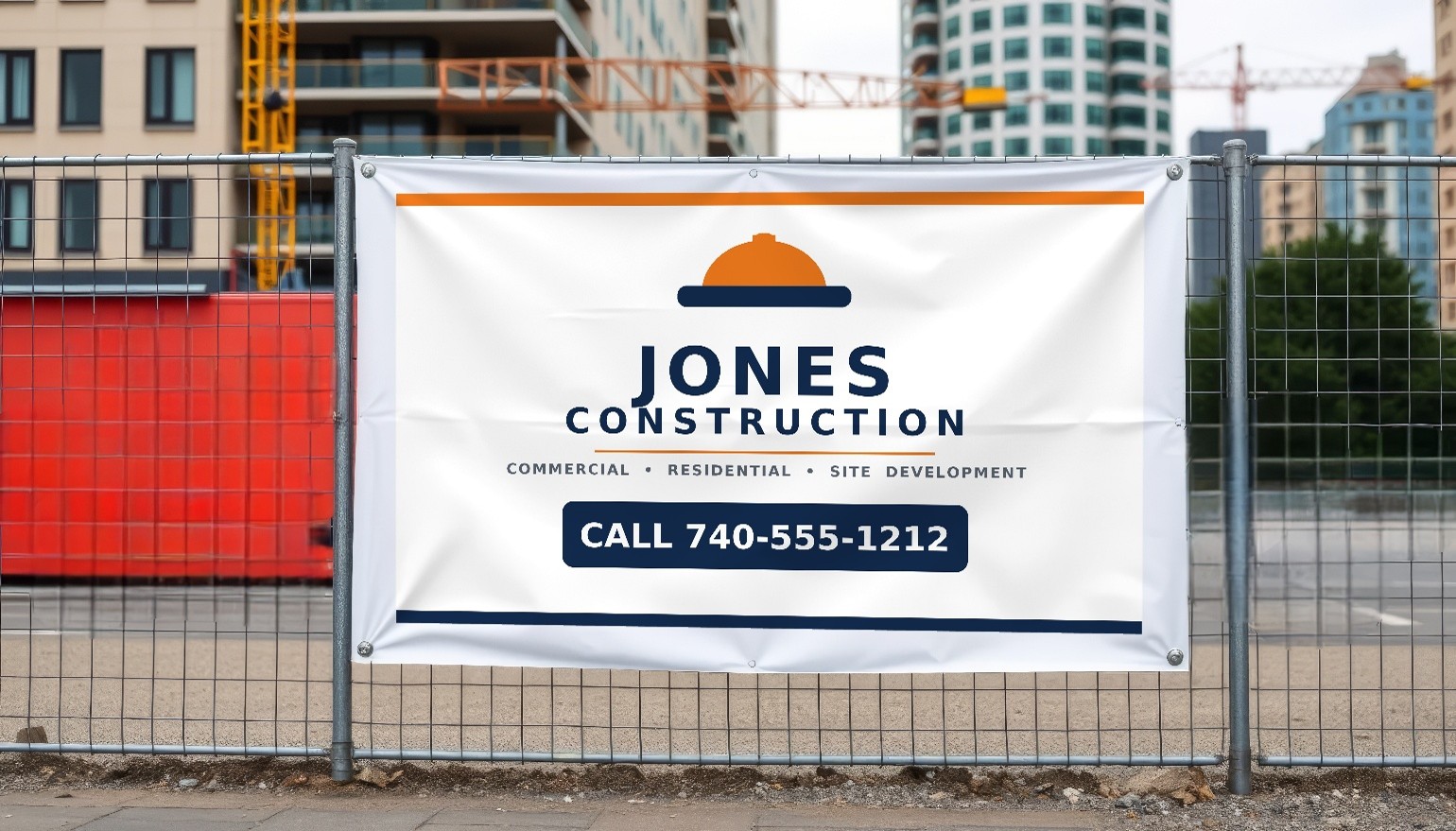
A professionally designed and printed project sign communicates something that no amount of word-of-mouth can fully replicate: that the contractor takes its work seriously enough to show up to the job site looking like a real company. The same logic that applies to fleet graphics applies here — the visual impression precedes the conversation.
At minimum, a project sign should include the company name and logo, phone number, and website. Adding a tagline or a one-line service description (“Commercial and Residential Construction — Serving Washington and Wood County”) turns the sign from identification into advertising.
Construction fence wraps
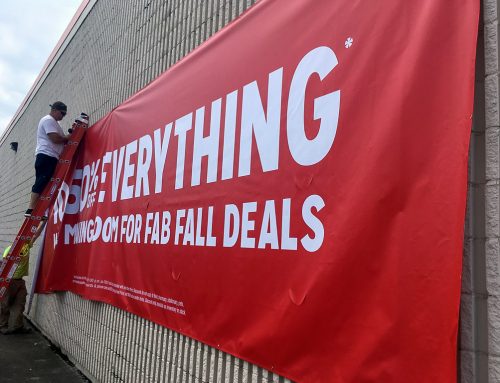
Construction fence wraps are the largest and most dramatic marketing opportunity on any job site with perimeter fencing. A fence wrap is a printed mesh banner designed to attach to chain-link or temporary construction fencing, covering the perimeter of the site with a continuous branded graphic that’s visible from every direction.
Done well, a fence wrap transforms a construction site from an eyesore into a brand statement. It communicates the scale and ambition of the project, keeps the visual clutter of an active site from being the first thing a passerby sees, and puts the contractor’s name and contact information in front of everyone in the area for the duration of the project.
Mesh banner vinyl is the correct material for fence wraps — the perforated surface allows wind to pass through rather than catching like a sail, which is essential for any installation attached to temporary fencing that isn’t engineered to handle significant wind load. A solid vinyl fence wrap in the wrong conditions is a liability; a mesh wrap is designed for the application.
For projects in visible locations — downtown sites, highway-adjacent construction, commercial corridor projects — a fence wrap is one of the highest-ROI signage investments a contractor can make. The cost is spread across the entire duration of the project, and the impression count accumulates daily.
Project banners and temporary displays
For ground-level impact at site entrances or along the project perimeter, printed banners on scrim vinyl or mesh provide high-visibility, weather-resistant display at a cost that makes sense for temporary installations. These are particularly effective at site entrances where visitor traffic is concentrated, where a banner can communicate the project name, contractor, and completion timeline in a format that’s readable at a glance.
For larger commercial developments or public-facing projects, a rendering banner — a large-format print showing an architectural rendering of the finished building — is a standard industry practice that creates public excitement about the project while it’s still under construction. These are most commonly printed on mesh banner vinyl for fence attachment or on ACM panels for a more permanent-looking display.
Fleet Lettering and Vehicle Graphics on the Job Site
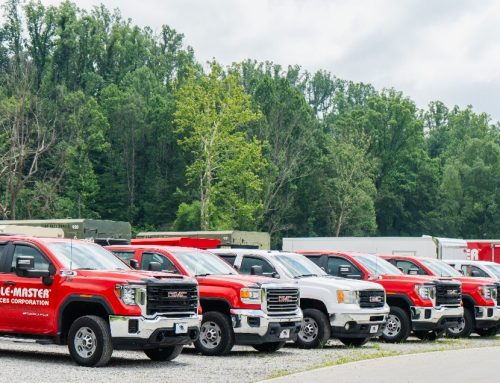
Every truck and van on the job site is an additional impression point. A crew of five vehicles with consistent, professional fleet graphics creates a visual presence on the site and in the surrounding neighborhood that amplifies the project sign significantly.
For contractors who haven’t invested in fleet graphics, a job site is a natural moment to reconsider. The vehicles are already there, already visible, already being seen by the same audience the project sign is reaching. A truck with a company name and phone number in clear lettering is a mobile extension of the job site’s marketing presence.
Fleet lettering — cut vinyl applied to door panels with company name, phone number, and trade — is the most cost-effective entry point. A full vehicle wrap is the highest-impact option. Both are meaningfully better than an unmarked vehicle.
Turnaround Time: Why Local Production Matters on a Job Site
Construction schedules don’t wait for vendors. A project sign that arrives three weeks after groundbreaking misses the first three weeks of visibility. Safety signage that’s delayed because it had to be ordered from a national distributor creates a compliance gap.
Local, in-house production solves both problems. When the sign shop doing your work is producing it on their own equipment rather than outsourcing to a regional or national print facility, turnaround is measured in days rather than weeks. A rush order is a conversation, not a form submission with a five-business-day processing window.
For contractors managing multiple active job sites, the ability to call a local shop and have a replacement sign, an additional safety graphic, or a new project banner ready within 48 hours is a meaningful operational advantage. It’s the kind of reliability that turns a vendor into a long-term partner.
At Signality Graphics in Marietta, Ohio
We produce project identification signs, construction fence wraps, safety graphics, project banners, and fleet lettering for contractors throughout Washington and Wood County and across the river into Wood County, West Virginia.
Everything is produced in-house. We understand construction schedules and we know how to work within them.
We’re at 158 Warner Street, Marietta, Ohio. Come give us a visit!
A Pre-Project Signage Checklist
Before breaking ground on your next project, run through this list:
- Project identification sign ordered and ready for installation on day one
- OSHA and ANSI-compliant safety signage produced for all required hazard categories
- Traffic control signage in place if the site affects any public road or pedestrian area
- Fence wrap ordered if the site has perimeter fencing in a visible location
- Site entry banner or directional signage in place for visitor and delivery orientation
- Fleet vehicles on the site lettered with company name and contact information
Rendering banner or project information display in place for public-facing projects
One more thing worth noting
The best time to order construction site signage is before you need it — not the week the project starts. A quick conversation with Signality Graphics at the bid stage or early in project planning means your signage is ready when the site opens, not playing catch-up with the schedule.
The Bottom Line
Construction site signage is not an afterthought. It’s a compliance requirement, a safety system, and a marketing asset — all at once. The contractors who treat it as all three consistently build stronger brand recognition in their markets than those who treat it as a checkbox.
In a regional market like the Mid-Ohio Valley, where project visibility is high and the same potential clients drive past the same job sites repeatedly, the cumulative effect of professional site signage over a year of active projects is significant. Every project is an opportunity to make the company’s presence felt before anyone picks up the phone.